
The Professional Guide to Silicone Color for Kitchenware: Achieving Food-Safe Brilliance
2026年4月9日
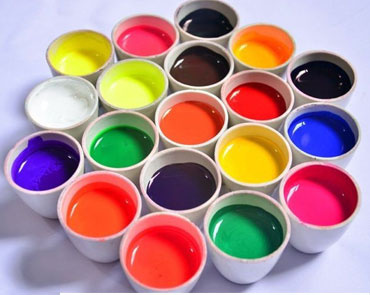
In the competitive landscape of silicone kitchenware manufacturing—from colorful spatulas to high-heat baking mats—silicone color is the first thing a consumer notices. However, for engineers and B2B procurement managers, coloring kitchen-grade silicone isn’t just about aesthetics; it’s about staying compliant with global food safety standards while maintaining material integrity at 200°C.
This technical guide focuses on the nuances of coloring Solid Silicone Rubber (HCR) specifically for compression-molded kitchenware, ensuring your products are vibrant, durable, and 100% food-safe.
Table of Contents
Why Kitchenware Requires Specialized Silicone Colorants
Material Selection: Liquid Paste vs. Solid Masterbatch
The Mixing Process: Ensuring Homogeneity on the Two-Roll Mill
Overcoming Thermal Degradation in High-Heat Baking Tools
Troubleshooting: Solving Color Migration and Fading
Regulatory Compliance: FDA, LFGB, and Beyond
Conclusion: Partnering for Professional Results
1. Why Kitchenware Requires Specialized Silicone Colorants
Unlike industrial gaskets, kitchenware is in constant contact with food and high temperatures. Using the wrong silicone color can lead to “leaching” or chemical migration, which poses health risks. High-quality kitchenware colorants must be:
Chemically Inert: They must not react with acidic or oily foods.
Odorless & Tasteless: Ensuring the consumer’s experience is not compromised.
Ultra-Heat Stable: Capable of withstanding 220°C (428°F) without shifting hue.
2. Material Selection: Liquid Paste vs. Solid Masterbatch
For solid silicone compression molding, the choice of pigment carrier is vital.
Silicone Color Paste: This is a liquid dispersion of pigments in silicone oil. For kitchenware, it is often preferred because it disperses faster during milling, reducing the risk of “pigment clumps” that could become points of failure in thin-walled products.
Color Masterbatch: These are solid “biscuits” of concentrated pigment. They are excellent for keeping the mixing room clean and preventing cross-contamination between different color runs.
3. The Mixing Process: Ensuring Homogeneity on the Two-Roll Mill
To achieve a “Retail-Ready” finish, the integration of silicone color must be flawless.
Gum Softening: Begin by milling the raw food-grade silicone gum until it forms a uniform band on the rollers.
Pigment Loading: For kitchenware, a concentration of 1.0% to 2.0% is standard. Over-pigmenting can make the silicone feel “sticky” or reduce its tear strength.
The Cross-Cut Technique: The operator must perform at least 12–15 “criss-cross” cuts. This high-shear mixing ensures no microscopic streaks.
Catalyst Addition: Add the curing agent (usually a platinum-catalyst for high-end kitchenware) only after the color is 100% uniform.
4. Overcoming Thermal Degradation in High-Heat Baking Tools
Kitchenware often undergoes Post-Curing (typically 4 hours at 200°C) to remove volatiles and meet FDA requirements. Many organic pigments cannot handle this heat and will “brown.” When sourcing silicone color, always specify High-Heat Stable Pigments to ensure the color survives the post-cure oven.
5. Troubleshooting: Solving Color Migration and Fading
Color Migration: Cause: Use of low-grade dyes. Solution: Use only high-purity silicone-specific color paste.
White Spots: Cause: Pigment agglomeration. Solution: Improve milling shear or pre-filter the paste.
Hue Shift: Cause: Lack of thermal stability. Solution: Verify the pigment is rated for 250°C.
6. Regulatory Compliance: FDA, LFGB, and Beyond
In the B2B world, certifications are your “license to sell.”
FDA (USA): Focuses on extraction limits.
LFGB (Germany/EU): A stricter standard often required for premium brands.
BPA-Free: Ensure your color carriers do not contain bisphenol A or phthalates.
7. Conclusion: Partnering for Professional Results
Choosing the right silicone color ensures your products remain vibrant, safe, and durable. At our facility, we specialize in FDA-compliant color matching for the global kitchenware market.
[Contact Our Technical Sales Team for Samples]
- 9 4 月, 2026
- 5:01 下午
- No Comments